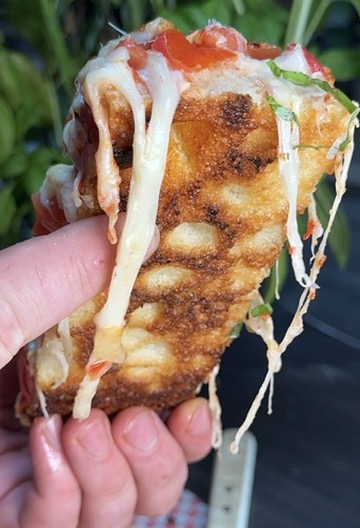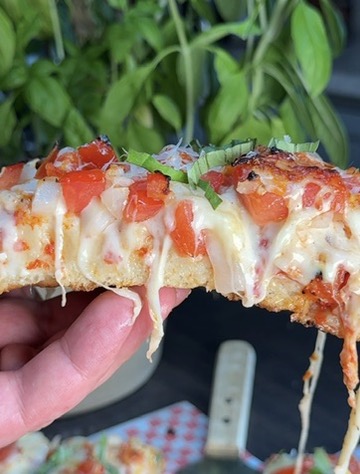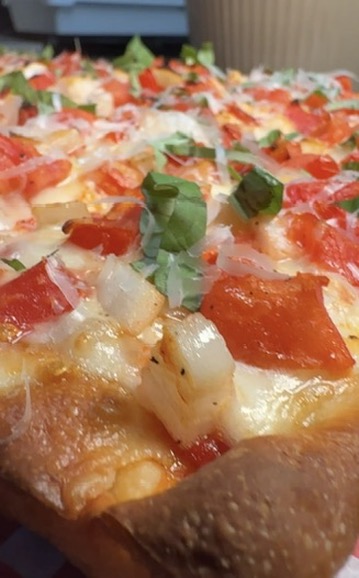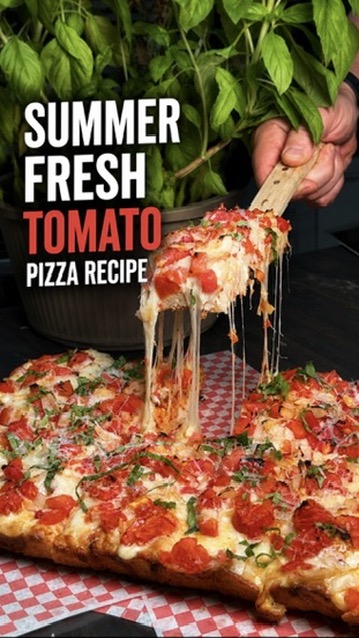
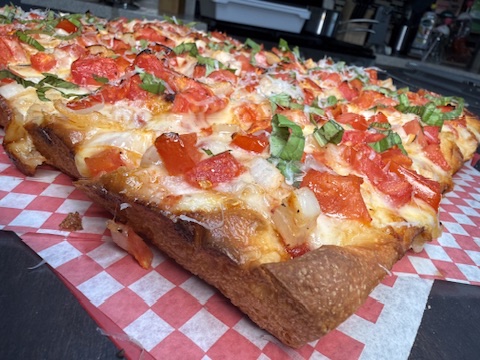
Summer Tomato Pan-Fried Sicilian Pizza (NEPA Style)
There is something special about summer in Northeastern Pennsylvania—especially when the tomatoes hit their peak. Around here, that means one thing: tomato pizza season.
This recipe was inspired by Tuesday’s summer tomato pizza, a bakery-only favorite that makes its appearance when tomatoes are perfectly ripe, juicy, and bursting with flavor. It is also a nod to Mary Lou’s Pizza in Old Forge, known for their legendary sliced tomato pie. Both are staples of NEPA food culture, and both showcase just how powerful simple, fresh ingredients can be.
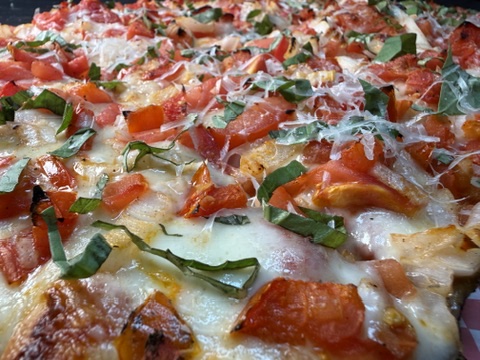
For this version, I wanted to bring those influences together and add my own spin. I leaned into the diced tomato style you see at Tuesday’s for that rustic, spreadable texture, though if you prefer the clean slices of Mary Lou’s, that works just as well. The real goal here is to let the tomatoes shine.
To make this pizza truly stand out, I used a pan-fried Sicilian crust—a signature method that delivers a crispy bottom with a soft, chewy interior. This is not meant to be light and airy. It is meant to be hearty, structured, and built to support a heavy layer of fresh toppings.
I sourced my ingredients from Purple Pepper Farm Stand on Keyser Avenue in Scranton, where the tomatoes were as fresh as it gets this time of year. I paired those with sweet “candy” onions and small garlic cloves for a balanced, aromatic bite. To boost the base, I added a thin layer of Stanislaus Picollo Datterini (baby plum tomatoes), which brings natural sweetness and helps keep the crust moist under the cheese.
The end result is a tomato-forward pizza that captures the essence of NEPA summer—bright, fresh, and deeply satisfying.
Ingredients
- 32 oz pizza dough (for a 13 x 17-inch pan)
- 2 large fresh tomatoes, diced
- 1 large sweet onion, diced
- 4 cloves garlic, minced
- 8 oz low-moisture whole milk mozzarella, shredded
- 8 oz muenster cheese, shredded
- 6 oz pizza sauce
- 2 tbsp extra virgin olive oil
- Salt and black pepper, to taste
- Pecorino Romano, freshly grated
- Fresh basil, for garnish
How to Make the Tomato Pizza Video
Instructions
- Prepare the Pan and Dough
Coat a 13 x 17-inch Lloyd pan generously with olive oil or shortening (Crisco works well as a shortcut). Press the dough evenly into the pan and let it rise at room temperature for about 4 hours, or until doubled in thickness and slightly bubbly. - Par-Bake the Crust
Spread a thin layer of pizza sauce over the dough. Place the pan on a baking steel in a 500°F oven and bake for about 4 minutes, just until the dough begins to set. Remove from the oven. For a crispier result, take the crust out of the pan and let it rest on a cooling rack briefly. - Add the Cheese Layer
Top the crust with mozzarella and muenster cheese, evenly distributed. The muenster adds a subtle tang and extra melt that pairs well with the tomatoes. - Prepare the Tomato Mixture
In a bowl, combine diced tomatoes, onion, and garlic. Season with salt and pepper, then drizzle with olive oil. Toss gently and let sit for 10 minutes to allow the flavors to meld. Transfer to a strainer to release excess moisture. - Top the Pizza
Spread the tomato mixture generously over the cheese, covering the entire surface. This is meant to be a tomato-forward pie, so do not hold back. Add a light sprinkle of extra cheese on top to help bind everything together. - Final Bake
Return the pizza to the 500°F oven and bake for 6 to 10 minutes. You are looking for a crispy bottom, fully melted cheese (including under the tomatoes), and reduced moisture on top. - Finish and Serve
Remove from the pan and place on a cooling rack for a few minutes. Finish with freshly grated Pecorino Romano and torn basil. Slice and serve.
Notes
- Diced vs. sliced tomatoes is a personal preference; both styles work well.
- Draining the tomato mixture is key to avoiding a soggy pizza.
- For a deeper dive into the pan-fried Sicilian method, see the full class on Virtual Pizza Academy.
This is a bold, fresh, and hearty pizza that celebrates peak-season tomatoes and the traditions of NEPA. It is simple at its core, but when done right, it delivers incredible flavor.